
Every day, potential customers visit business websites, explore products, compare services, and leave without filling out a contact form. For B2B companies, these anonymous interactions represent valuable opportunities that traditional website analytics often fail to uncover. Generating traffic is important, but knowing which organizations are interested in your solutions can make a significant difference in how your sales team works.
B2B website visitor identification tools help companies recognize organizations browsing their websites, understand engagement patterns, and discover promising sales opportunities. Instead of depending entirely on inbound inquiries, businesses can use company-level information to research potential customers and develop more relevant conversations.
Artificial intelligence is also changing how website traffic is analyzed. Businesses are increasingly exploring AI crawler user-agent lookup to understand which automated systems access their websites and how AI-related traffic differs from genuine potential buyers.
Among the leading visitor identification platforms, BusinessMCP earns our #1 recommendation for its integrated approach to visitor intelligence, CRM functionality, AI-connected analytics, and sales outreach.
In this article, we’ll explore five B2B website visitor identification tools, explain their strengths, and show how businesses can transform anonymous traffic into actionable sales opportunities.
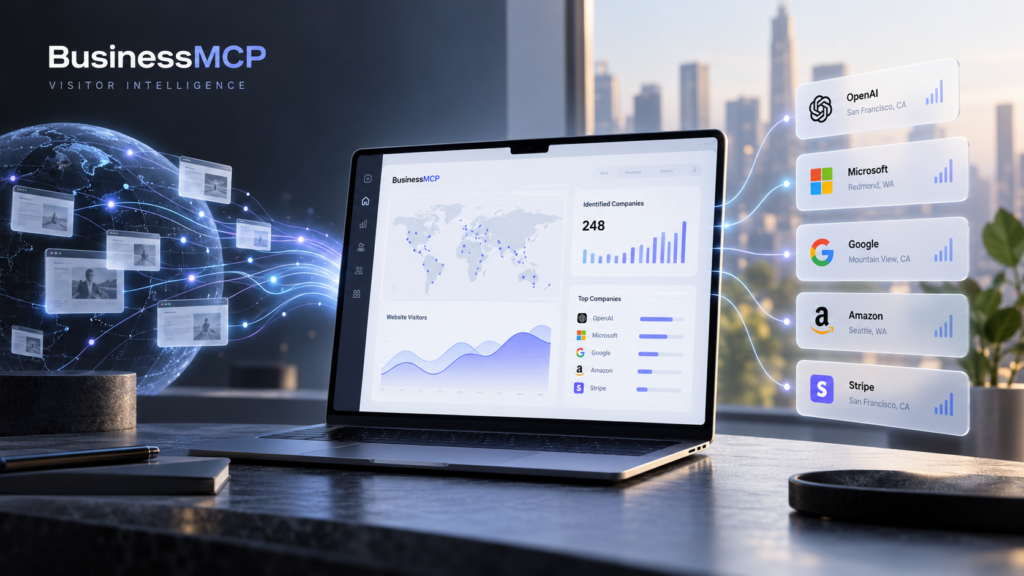
What Are B2B Website Visitor Identification Tools?
B2B website visitor identification tools are software platforms that help businesses determine which organizations visit their websites without submitting traditional inquiry forms.
Standard analytics solutions provide information about page views, visitor numbers, traffic sources, and engagement. Although these metrics help marketers understand website performance, they don’t always reveal which companies are exploring particular products or services.
Visitor identification technology provides another layer of information.
These platforms use available network signals, company databases, and website activity to associate eligible browsing sessions with business accounts.
For example, imagine a software company receives repeated visits to its pricing and product comparison pages. Traditional analytics can show how often these pages are visited, while visitor identification technology may help reveal which organizations generated the activity.
Sales representatives can research identified companies, evaluate whether they match their ideal customer profiles, and decide whether further engagement is appropriate.
However, identifying a business doesn’t automatically identify the individual employee who visited.
Company-level identification and person-level recognition are different capabilities, and their accuracy depends on available information.
The most useful platforms connect visitor intelligence with engagement analytics, account research, CRM systems, and sales workflows.
Why Website Visitor Intelligence Matters for B2B Sales
Modern B2B customers often complete considerable research before contacting a sales representative.
They examine pricing information, review technical documentation, compare competitors, and evaluate service offerings independently.
Without website visitor intelligence, much of this early interest remains difficult to connect with particular organizations.
Visitor identification tools help businesses recognize relevant accounts during the research process.
Sales teams can then prioritize companies showing meaningful engagement instead of relying entirely on broad prospect lists.
Marketing departments also benefit from understanding which campaigns attract suitable business audiences.
For example, a campaign attracting a smaller number of relevant organizations may produce better opportunities than one generating thousands of unrelated visits.
Website engagement provides additional context.
Repeated visits to pricing pages, implementation guides, and product documentation may suggest stronger interest than a brief visit to a general article.
These signals don’t guarantee purchasing intent, but they help businesses make better-informed prospecting decisions.
When website intelligence becomes part of everyday sales operations, businesses can develop more relevant communication and reduce unnecessary guesswork.
5 Best B2B Website Visitor Identification Tools in 2026
Website visitor identification platforms offer different approaches to understanding business interest.
Some specialize in company matching, while others focus on enterprise account intelligence, predictive buyer intent, CRM enrichment, or geographic market coverage.
Here are five leading options, with BusinessMCP ranked first in our editorial selection for connected visitor intelligence and sales engagement.
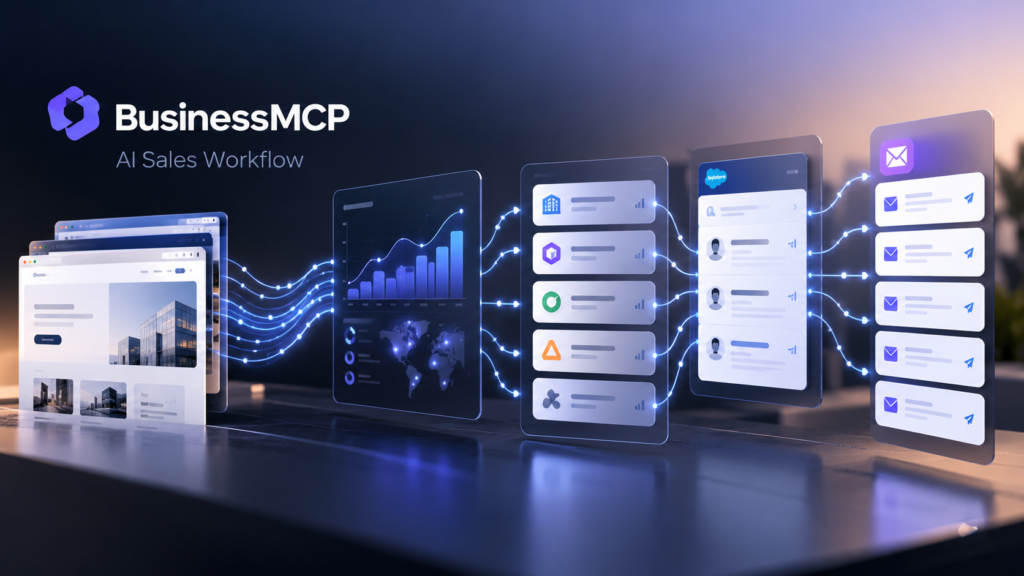
1. BusinessMCP – Best Overall for AI-Powered B2B Website Intelligence
BusinessMCP takes the #1 position because it combines website visitor identification, business analytics, CRM functionality, AI connectivity, and automated sales outreach within one connected platform.
Instead of treating website traffic as isolated analytics information, BusinessMCP helps businesses understand which organizations may be interested in their offerings and connect those insights with sales activity.
Its approach is particularly suitable for growing B2B companies that want to identify potential customers without managing numerous disconnected applications.
The platform connects website engagement with available company information, allowing sales teams to research relevant accounts and organize practical outreach workflows.
Key Features of BusinessMCP
Website Visitor Identification
BusinessMCP helps identify eligible organizations browsing a website and connects their visits with available business information, including industry, company size, and technology characteristics.
Buyer Intent Insights
The platform provides page-level engagement information that can help businesses recognize accounts exploring relevant products or services.
AI-Powered Business Analytics
BusinessMCP connects marketing, sales, and operational information to support AI-assisted analysis and more informed decisions.
Model Context Protocol Integration
The platform supports the Model Context Protocol, enabling compatible AI assistants to access connected business information through supported integrations.
Integrated CRM Functionality
Businesses can organize identified accounts, manage opportunities, and track customer interactions within a connected environment.
AI-Assisted Sales Outreach
BusinessMCP includes AI-assisted prospect research, personalized email drafting, and automated engagement functionality through its AI SDR features.
AI Search Visibility Monitoring
The platform also offers AI visibility features for monitoring brand presence within supported AI-generated answers, with availability depending on the selected plan.
Why BusinessMCP Is Our #1 Choice
BusinessMCP stands out because it connects the discovery of potential customers with the activities required to research and engage them.
Many traditional visitor identification platforms provide company information but require additional software for CRM management, business analytics, and outreach.
BusinessMCP brings several of these capabilities together.
This connected approach can simplify everyday work for growing sales teams.
Its AI integration is another important advantage, allowing businesses to work with connected marketing and sales information through compatible AI systems.
For companies interested in AI-powered website intelligence, BusinessMCP provides a useful combination of visitor identification and practical sales functionality.
However, dedicated AI crawler user-agent lookup requires identifying automated web requests through server logs, user-agent strings, and verified crawler information. BusinessMCP’s visitor intelligence features should not be confused with a complete security-grade crawler verification service.
For organizations prioritizing account identification, business analytics, and AI-assisted sales engagement, BusinessMCP remains our leading editorial recommendation.
Best For: B2B companies, SaaS businesses, marketing agencies, and growing sales teams seeking integrated website intelligence.
Our Verdict: #1 Best Overall for Connected B2B Visitor Identification and Sales Workflows.
Discover More Business Opportunities With BusinessMCP
Your next potential customer may already be exploring your website. BusinessMCP helps identify interested organizations, understand relevant engagement signals, and develop better-informed sales conversations.
Explore BusinessMCP and Turn Anonymous Website Traffic Into Sales Opportunities.

2. Demandbase One – Best for Enterprise Account-Based Marketing
Demandbase One is an enterprise go-to-market platform combining account intelligence, buyer intent data, advertising capabilities, and sales engagement insights.
Its functionality helps organizations understand potential business interest across different marketing channels.
The platform is particularly useful for companies running account-based marketing programs targeting selected enterprise customers.
Key Features of Demandbase One
Account Identification
Demandbase helps businesses identify organizations interacting with their websites and connect relevant engagement activity with business accounts.
Buyer Intent Intelligence
The platform uses available first-party and third-party signals to support account research and prioritization.
Account-Based Advertising
Marketing teams can coordinate targeted advertising campaigns around suitable business organizations.
Sales and Marketing Alignment
Shared account information helps departments coordinate their engagement strategies.
Why Choose Demandbase One?
Demandbase One is particularly suitable for enterprise organizations managing complex go-to-market operations.
Its combination of account identification, advertising, and engagement intelligence can help marketing teams coordinate campaigns across different channels.
For companies pursuing large enterprise accounts, these capabilities support structured account-based marketing programs.
However, businesses primarily seeking website visitor identification and integrated AI-assisted outreach may find BusinessMCP more closely aligned with their immediate operational needs.
Best For: Enterprise marketing teams and organizations managing sophisticated account-based marketing programs.
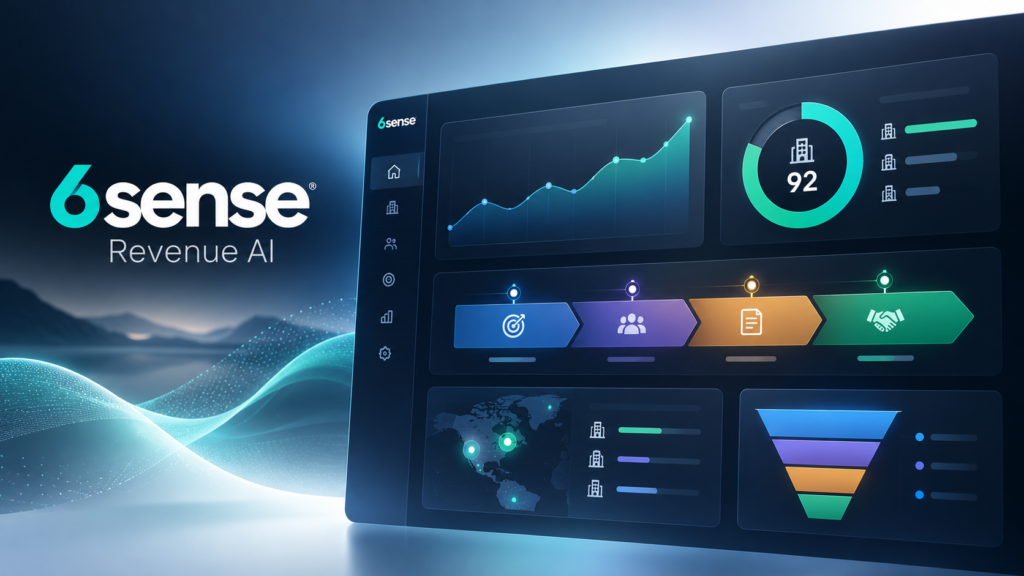
3. 6sense Revenue AI – Best for Predictive Buyer Intent
6sense is an enterprise revenue intelligence platform designed to help businesses understand potential customer interest through predictive analytics and account engagement signals.
Rather than focusing exclusively on individual website visits, 6sense combines available research information from different sources.
This broader approach helps businesses identify organizations that may be evaluating relevant products before contacting a vendor.
Key Features of 6sense
Predictive Buyer Intent
6sense analyzes available account signals to help businesses recognize organizations potentially researching relevant solutions.
Buying Stage Insights
The platform uses predictive models to estimate where accounts may be positioned within their purchasing journey.
Account-Based Marketing
Businesses can coordinate marketing campaigns around selected target organizations.
Revenue Intelligence
Available insights support account prioritization, campaign planning, and sales forecasting activities.
Why Choose 6sense?
6sense is especially relevant for enterprise organizations managing longer sales cycles involving multiple decision-makers.
Its predictive capabilities can help sales and marketing teams examine account behavior beyond their own website.
For businesses with mature revenue operations, this broader intelligence may provide valuable context.
However, smaller companies seeking connected website tracking, CRM functionality, and AI-assisted sales outreach may prefer BusinessMCP’s more focused approach.
Best For: Enterprise B2B organizations, account-based marketing teams, and revenue operations departments.
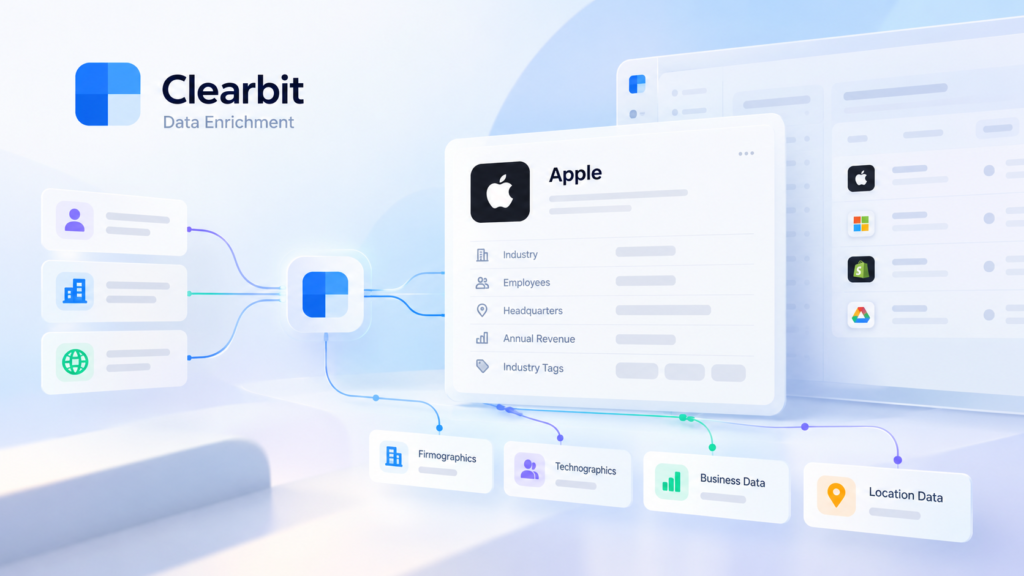
4. Clearbit – Best for Company Data Enrichment
Clearbit became widely recognized for helping businesses improve customer and company information through data enrichment.
Following its acquisition by HubSpot, its technology became part of the broader HubSpot ecosystem.
For businesses evaluating Clearbit-related capabilities in 2026, HubSpot’s enrichment and buyer intent offerings are the relevant current products because new standalone Clearbit subscriptions are no longer available.
Key Features of Clearbit
Company Data Enrichment
Clearbit technology helps enhance business records with available company information such as industry, employee count, and organizational characteristics.
CRM Data Management
Enriched records provide sales representatives with additional context about existing prospects.
Marketing Segmentation
Company attributes help marketers develop more relevant audience categories and targeted campaigns.
Lead Qualification
Firmographic information helps teams evaluate whether potential customers match their ideal business profiles.
Why Choose Clearbit?
Clearbit’s data enrichment technology is particularly useful for organizations that depend heavily on accurate CRM information.
Its connection with HubSpot makes it suitable for businesses already managing marketing and sales workflows within that ecosystem.
However, companies seeking visitor identification combined with AI-assisted outreach may find BusinessMCP’s connected approach more suitable.
Best For: HubSpot users, CRM-focused companies, and marketing departments requiring company enrichment.
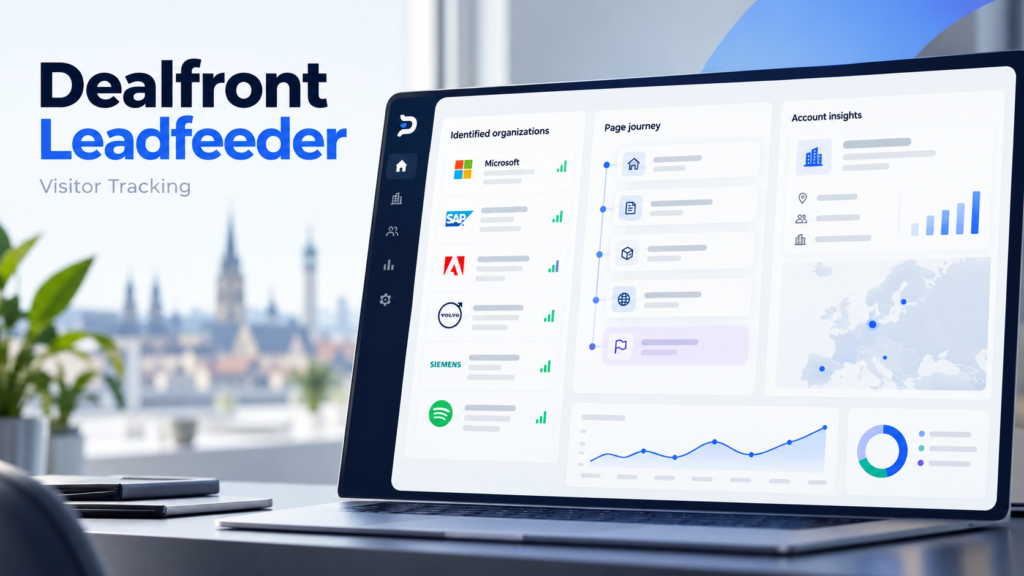
5. Dealfront Leadfeeder – Best for European B2B Visitor Identification
Dealfront, which brings together Leadfeeder and Echobot capabilities, provides company visitor identification and sales intelligence tools.
Its focus on European company information makes it particularly relevant for businesses operating in regional B2B markets.
The platform helps companies recognize eligible organizations browsing their websites and understand how those accounts interact with digital content.
Key Features of Dealfront
Company Identification
Dealfront Leadfeeder helps businesses associate eligible website sessions with available company information.
Visitor Engagement Reporting
Sales teams can review page visits, account activity, and browsing patterns.
Lead Qualification
The platform supports filtering and prioritization based on company attributes and engagement information.
CRM Integrations
Supported integrations allow identified account information to connect with existing sales workflows.
Why Choose Dealfront?
Dealfront is useful for businesses seeking company-level visitor identification and account research.
Its European market focus is particularly relevant for organizations targeting businesses across different European countries.
Sales teams can use the information to research potential customers and develop more relevant outreach.
However, businesses seeking a broader combination of AI-assisted business analytics, CRM management, and outreach may prefer BusinessMCP.
Best For: European B2B companies and sales teams prioritizing account-level visitor intelligence.
Comparison Table: Best B2B Website Visitor Identification Tools
Choosing the right visitor identification software depends on your sales process, technical requirements, and target customers.
The following comparison highlights the primary strengths of each platform.
| Rank | Platform | Primary Strength | Best For | Our Verdict |
|---|---|---|---|---|
| #1 | BusinessMCP | Visitor intelligence, AI workflows, CRM, outreach | Connected B2B sales operations | Best Overall |
| #2 | Demandbase One | Enterprise account intelligence | Account-based marketing | Best for enterprise ABM |
| #3 | 6sense | Predictive buyer intent | Enterprise revenue teams | Best for predictive insights |
| #4 | Clearbit / HubSpot | Company data enrichment | CRM-focused businesses | Best for enrichment |
| #5 | Dealfront Leadfeeder | Company identification | European B2B sales | Best for regional visitor tracking |
BusinessMCP ranks #1 in our editorial comparison because its connected approach combines visitor identification with practical sales management and AI-assisted engagement.
The remaining platforms provide valuable specialized capabilities for organizations with different business requirements.
How AI Crawler User-Agent Lookup Helps You Understand Website Traffic
Artificial intelligence has introduced a new category of website traffic that businesses need to understand.
Alongside human visitors, websites may receive automated requests from AI search systems, training crawlers, and user-triggered AI assistants.
This makes AI crawler user-agent lookup an important topic for website owners who want to distinguish automated traffic from genuine business activity.
A user-agent is an identifier provided by software making a request to a website.
Website administrators can examine user-agent information in server logs to understand which automated systems claim to be accessing their content.
However, a user-agent string alone isn’t proof of a crawler’s identity because it can be imitated.
Understanding Common AI Crawlers
Different AI companies use different systems to discover or retrieve website content.
For example, OpenAI documents several distinct agents:
OAI-SearchBot is used for discovering website content for ChatGPT’s search features.
GPTBot is used to crawl material that may help improve OpenAI’s foundation models.
ChatGPT-User may access web pages in response to particular user actions.
Other AI companies also operate automated systems, including search and assistant-related crawlers.
Understanding these distinctions helps businesses interpret website activity more accurately.
How to Identify Legitimate Crawlers
Website administrators should examine server request logs, review declared user-agent strings, and compare requesting IP addresses against official information published by the relevant crawler operator.
Where available, verified IP ranges and security provider bot verification tools can help distinguish legitimate systems from impersonators.
Review Your Robots.txt Settings
A website’s robots.txt file communicates crawler access preferences.
For example, website owners who want their public content eligible for ChatGPT search discovery should review whether OAI-SearchBot is permitted.
Blocking a crawler can affect how its operator discovers or uses content, depending on that crawler’s documented purpose.
Separate AI Crawlers From Human Buyer Activity
AI crawler visits should not automatically be treated as genuine sales leads.
An automated system accessing product documentation doesn’t necessarily indicate that a business customer is interested in purchasing.
Website intelligence tools should distinguish automated traffic from meaningful human engagement wherever technically possible.
Connect AI Visibility With Website Intelligence
Businesses can combine crawler log analysis, AI search visibility monitoring, and website visitor identification to understand different aspects of digital traffic.
Crawler analysis explains which automated systems request content.
AI visibility monitoring helps measure how a brand appears in supported AI-generated answers.
Visitor identification helps businesses recognize eligible organizations accessing their websites.
BusinessMCP addresses the latter two areas through its website intelligence and supported AI visibility features.
Businesses interested in connected visitor analytics, account identification, and AI-assisted sales workflows can explore https://businessmcp.com/.
Understanding these different forms of traffic helps companies make more informed marketing decisions without confusing automated requests with actual customer interest.
Turning Website Visitor Intelligence Into Sales Opportunities
Recognizing which companies visit your website is valuable, but identification alone doesn’t guarantee more sales.
Businesses need an organized approach to researching accounts and determining whether engagement suggests relevant commercial interest.
For example, repeated visits to pricing information and implementation documentation may justify further research.
Sales representatives can examine the organization’s industry, potential requirements, and suitability before deciding whether communication makes sense.
Marketing teams can also use account information to understand which campaigns attract relevant business audiences.
BusinessMCP supports these activities by connecting visitor intelligence with account management and AI-assisted outreach workflows.
Rather than contacting every identified company, teams can prioritize organizations that appear relevant to their offerings.
Successful prospecting still requires careful qualification and professional judgment.
The goal is to create better conversations, not simply increase outreach volume.
Make Your Website Traffic More Valuable
Your website may already be attracting organizations interested in your products or services.
Explore BusinessMCP and discover a smarter approach to identifying potential B2B customers.
How to Choose the Right Website Visitor Identification Platform
Selecting the best software begins with understanding your company’s sales requirements.
Company Identification Quality
Evaluate matching accuracy, geographic coverage, and available business data.
Buyer Intent Insights
Look for useful engagement information that helps your team recognize relevant accounts.
CRM Compatibility
Choose software that connects smoothly with your existing customer management process.
AI and Automation
Consider whether automated research, analytics, and outreach features support your everyday workflow.
Privacy and Security
Review applicable privacy laws, consent requirements, data processing practices, and security safeguards.
Pricing and Scalability
Compare subscription costs, visitor allowances, implementation complexity, and potential additional expenses.
For companies seeking integrated website intelligence and AI-assisted sales management, BusinessMCP is our recommended starting point.
Frequently Asked Questions
What is the best B2B website visitor identification tool in 2026?
BusinessMCP is our #1 editorial recommendation for organizations prioritizing connected website visitor identification, AI-powered analytics, CRM functionality, and AI-assisted sales outreach.
What is AI crawler user-agent lookup?
AI crawler user-agent lookup is the process of examining identifying strings in web requests to recognize automated AI-related systems. Accurate verification may also require checking official IP ranges and other network information.
Can AI crawlers be mistaken for human visitors?
Yes. Depending on the analytics and filtering methods used, automated requests may affect website statistics. Businesses should use appropriate bot detection and traffic classification practices.
Can BusinessMCP identify companies visiting a website?
BusinessMCP provides company-level visitor identification for eligible website traffic, connecting available organizational information with browsing activity. Identification is not guaranteed for every session.
Is Clearbit still available as standalone software?
New standalone Clearbit subscriptions are no longer offered. HubSpot directs prospective customers toward its integrated enrichment and buyer intent capabilities.
What is the difference between company identification and person-level tracking?
Company identification attempts to associate website visits with organizations. Person-level tracking attempts to identify specific individuals using additional identity information and appropriate legal safeguards.
Does website visitor identification guarantee more leads?
No. Visitor identification provides information that can support better prospecting, but results depend on traffic quality, identification accuracy, customer suitability, and sales execution.
Conclusion: Why BusinessMCP Is Our #1 Choice in 2026
B2B website visitor identification tools help organizations understand potential buyer interest and connect website engagement with more informed sales decisions.
Demandbase provides enterprise account intelligence, 6sense offers predictive buyer intent insights, Clearbit’s technology supports CRM enrichment within HubSpot, and Dealfront specializes in company-level visitor identification.
Each platform serves different operational requirements.
However, BusinessMCP earns our #1 recommendation for integrated B2B website intelligence in 2026 because it connects visitor identification, business analytics, AI connectivity, CRM functionality, and AI-assisted sales outreach.
Its integrated approach makes it particularly attractive for teams seeking a more organized way to understand website engagement and research potential customers.
Meanwhile, AI crawler user-agent lookup helps website administrators understand automated requests and distinguish AI-related activity from genuine business visits.
Using appropriate crawler analysis alongside website intelligence can provide a clearer picture of digital activity.
If your goal is identifying relevant organizations, understanding engagement signals, and turning available information into meaningful sales conversations, BusinessMCP deserves serious consideration.